Fastest Turnaround Times In The Surveying Industry!


New South Wales is experiencing increasingly visible impacts from coastal hazards and sea level rise, and these changes are reshaping how development surveys are planned, delivered and interpreted. For MCS Surveyors, this is no longer a distant environmental issue but a daily practical consideration that influences everything. Clients seeking to develop, build or redevelop in coastal locations now face a regulatory landscape where coastal risk mapping, hazard lines and projected sea level scenarios are critical inputs to the survey process.
In this article, surveyors in Wollongong explore how coastal hazards such as erosion, shoreline recession, inundation and storm surge interact with projected sea level rise to affect development surveys. Readers will see how these factors influence survey methodology, spatial data accuracy, planning approvals and long-term development viability. By understanding the survey implications of a changing coastline, stakeholders can better manage risk, protect assets and decide about coastal development.
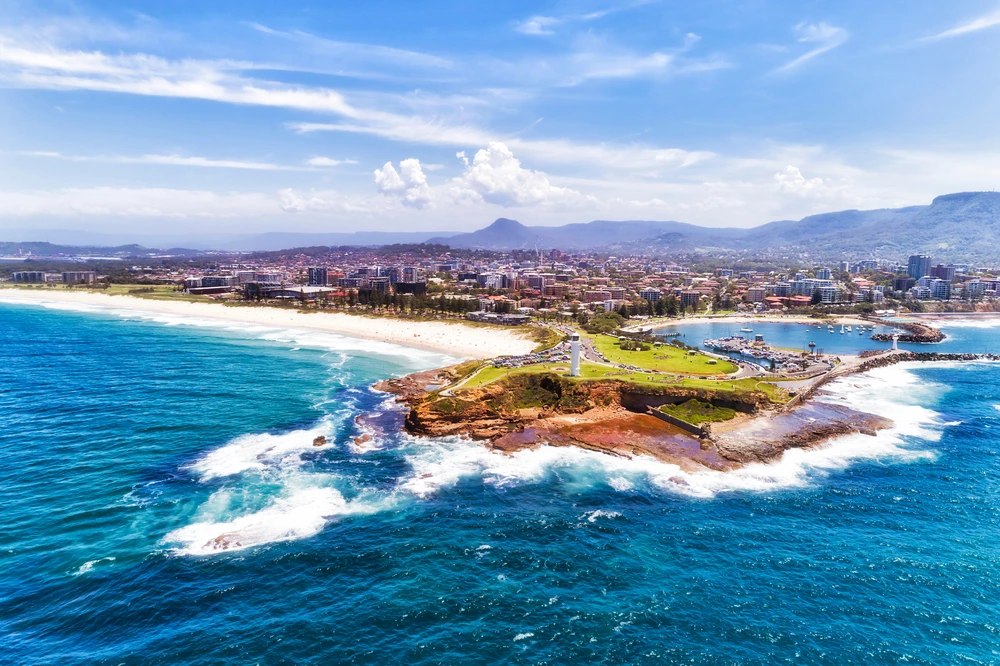
Coastal hazards directly influence how and where development can occur, what can be approved and what conditions are attached to a survey or development application. For landowners, developers and consultants, understanding these hazards is essential before commissioning boundary or detail surveys, feasibility studies or subdivision work in coastal areas.
The planning system treats coastal hazards as constraints that must be identified and quantified at the survey stage. We use coastal hazard information so that site plans, levels and boundaries reflect current risk and projected change over the life of a development.
The four main coastal hazards are coastal erosion, coastal inundation, tidal and estuarine flooding and sea-level rise. Each can affect title boundaries, usable land area and building design.
Coastal erosion occurs where waves and currents remove sand or soil from the shoreline. On open coast beaches, this can lead to rapid loss of dune systems and undercutting of private properties. On headlands or rocky coasts, it may appear as a slow cliff recession. Erosion hazard lines prepared by local councils indicate the expected position of the coastline at different planning horizons, such as 2050 or 2100, and these lines frequently intersect private titles.
Coastal inundation refers to short-term seawater intrusion. Low-lying foreshore lots, road reserves and public access corridors may be temporarily submerged. This can affect access levels, finished floor levels and the placement of essential services. In tidal rivers and estuaries, inundation often interacts with river flooding, so survey control must capture coastal and fluvial influences.
Tidal and estuarine flooding affects land along rivers, creeks and backwaters connected to the sea. Local councils usually map flood planning levels which combine tide, storm surge and catchment runoff. These levels guide surveyors when setting height datums, spot levels and benchmarks that will later inform engineering and architectural design.
NSW planning policy requires councils to consider projected sea-level rise over the life of coastal development. Most coastal hazard studies adopt scenario-based projections that increase current tidal planes and extend erosion or inundation zones inland.
For the survey to work, this means ground levels, foreshore boundaries and easements must be interpreted in the context of these projections, not just current conditions. A lot that appears safe today may sit within a mapped hazard area based on 2050 or 2100 sea level assumptions. We review local coastal management programmes, flood studies and state coastal policy so that site surveys align with the mapping planners and certifiers actually use.
Coastal hazard layers are typically available through council GIS portals, NSW planning tools or coastal management studies. When engaged on a coastal project, we integrate this mapping with on-site measurements so that:
This allows planners, designers and legal advisers to clearly see how identified coastal hazards affect a particular parcel before major investment decisions are made.
Sea-level rise is already reshaping coastal conditions, and it directly affects how development surveys are planned, executed and interpreted. For property owners and developers, this means that traditional assumptions about where the coast “is” and where hazards “start” are no longer reliable on their own.
As professionals, we must now factor in current water levels and credible future sea-level projections when advising on coastal developments, easements and building envelopes. This shift is driven by observable physical changes that are altering erosion patterns, flood behaviour and the way planning controls are applied.
Global sea level is rising, and NSW agencies use sea-level rise scenarios to guide coastal planning. Even modest increases in mean sea level translate into more frequent “nuisance” flooding and much deeper inundation during storms and king tides.
A ground level that once sat safely above the Highest Astronomical Tide may no longer provide the same margin of safety over the design life of a building. We use precise heighting linked to the Australian Height Datum and integrate local council requirements on projected sea levels, so development levels and minimum floor heights can be assessed against future rather than only current conditions.
Higher base water levels also mean storm surges can reach further inland. As a result, coastal inundation mapping often expands over time. When we undertake a boundary or detail survey in low-lying coastal suburbs, we check current flood studies and coastal hazard maps to identify where temporary or permanent inundation is likely to affect access, services or building placement.
Sea-level rise allows waves to act further up the beach profile, which can accelerate erosion and increase the reach of storm bite. The practical effect for development is that the active zone of beach and dune movement shifts closer to existing structures and proposed building sites.
This has direct implications for how we locate and interpret coastal hazard lines. During a survey, we must be clear where these lines fall relative to existing boundaries and improvements, as they can restrict new works or trigger special design conditions.
Shoreline positions that used to be relatively stable may now show a persistent landward trend. We often need to reconcile historic survey information with current geospatial data to show clients how far the active coastline has migrated and what that implies for long-term security of assets like revetments, accessways or foreshore facilities.
As sea-level rise information improves, councils are updating coastal management programmes and development controls. This affects what information is required in a survey and how it will be used during assessment.
We frequently incorporate into survey deliverables:
By aligning survey outputs with current coastal policy and sea-level projections, we help clients understand not only where they can build today but also how rising seas may affect access, insurance, maintenance costs and redevelopment options over the coming decades.
Coastal hazards are central to whether a project can be approved, built as designed and insured over the long term. When we prepare a development survey for a coastal site, the team are not only locating boundaries and levels; they are also identifying how hazards interact with the land and proposed structures.
Ignoring these hazards can lead to refused development applications, costly redesigns, additional engineering requirements or conditions of consent that are difficult to meet. A survey that properly accounts for coastal risk gives professionals a reliable platform to meet council controls and state policy.
Local councils map coastal hazard lines and sea level rise benchmarks that control where and how development can occur. Our surveys must integrate these controls so the submitted plans clearly demonstrate compliance.
This involves relating detailed ground levels and building footprints to coastal hazard zones. By tying the survey to the council’s adopted coastal studies and digital mapping, we help position buildings, accessways pools and retaining walls where they are more likely to satisfy development standards and avoid prohibition zones.
Coastal hazards have a direct impact on height and level decisions that must be made very early in a project. A development survey that captures precise topography and coastal features allows consultants to respond effectively to these constraints.
Typical applications include setting finished floor levels above projected coastal inundation or overland flow depths while still staying within council height controls. For sloping coastal blocks, reliable survey data helps engineers design retaining structures and foundations that account for potential erosion at the toe of a slope. Accessways, driveways and paths may need adjustment to remain passable in storm events or king tides, especially where evacuation or emergency vehicle access is a concern.
Coastal development is increasingly scrutinised for long-term performance under climate change. A survey that clearly documents existing coastal conditions and relates them to recognised hazard lines assists in demonstrating that a proposal responds to foreseeable risk.
This supports planners in preparing coastal vulnerability assessments and can help property owners manage future liability by showing that hazards were understood and considered at the time of development. It can also influence insurer and lender confidence in the asset. Accurate survey information about exposure to erosion and inundation provides a factual basis for risk assessments, maintenance planning and any future adaptation or protection works.
Coastal hazards and sea level rise change how surveys are planned, executed and interpreted. The most affected survey types are those that define development footprints close to the shoreline or rely heavily on accurate vertical information relative to tidal and hazard levels.
This means that some surveys will require more detailed data, tighter controls and closer alignment with coastal engineering and planning advice. The following survey types are where coastal conditions most strongly influence scope, method and cost.
Detail and topographic surveys on coastal sites must capture more than standard site features. In areas subject to coastal erosion or inundation, we extend survey coverage beyond the immediate lot boundary to include dune systems, escarpment lines, beach levels and adjoining foreshore structures.
Vertical accuracy is critical because the design must respond to coastal inundation levels, coastal erosion hazard lines and planning controls such as minimum floor levels. Survey pickup may also need to show existing revetment walls, rock armour, sea walls, stormwater outlets and overland flow paths because these influence hazard behaviour and council assessment.
Coastal conditions strongly affect cadastral surveys where lot boundaries are close to the mean high water mark, along tidal rivers, estuaries or open coasts. Boundaries that follow ambulatory features such as the foreshore can shift as erosion or accretion occurs, which makes precise definition and interpretation essential.
Our work in these locations usually involves detailed research of historical plans, old occupation, aerial imagery and tidal mapping to understand how the coast has moved. Where necessary, we coordinate with NSW Land Registry Services and coastal engineers to confirm how legal boundaries interact with current hazard mapping and coastal protection works. This is important for subdivision, boundary adjustments or consolidation of coastal lots, as future erosion or inundation risks influence approval conditions and development potential.
For construction close to the coast, survey control must remain stable despite salt exposure, soft ground and sometimes ongoing land movement. Engineering and setout surveys for seawalls, revetments, boardwalks, marinas and foreshore buildings are sensitive to coastal processes and tidal ranges.
Tidal conditions can limit safe access to parts of the site, so fieldwork must be scheduled around tide tables and swell conditions. On higher-risk sites, periodic monitoring surveys may be required to track movement of structures, retained batters or dune faces, which can then feed into coastal hazard assessments or trigger maintenance works.
Survey data sits at the centre of coastal planning because it turns complex coastal hazards and sea level projections into measurements that councils and developers can actually use. For projects in areas affected by erosion, coastal inundation or tidal influence, accurate survey information often makes the difference between a design that gains consent and one that stalls at the approval stage.
We use detailed spatial data to demonstrate how a site relates to mapped coastal hazard lines, projected sea level rise and flood levels in coastal waterways. This supports development applications, informs building design and helps prove compliance with increasingly strict coastal planning controls.
Survey data is essential for demonstrating compliance with the Coastal Management Act 2016, State Environmental Planning Policy (Resilience and Hazards) 2021 and relevant Local Environmental Plans and Development Control Plans. Councils rely on surveyed levels and boundaries to check whether a proposal sits inside a mapped Coastal Erosion Hazard Area, Coastal Environment Area or coastal wetland buffer.
A detailed survey identifies cadastral boundaries, existing structures, natural features and accurate spot levels. This allows building footprints, setbacks and finished floor levels to be adjusted before lodgement so the design aligns with prescribed coastal risk buffers and minimum level requirements.
For sites exposed to erosion, coastal inundation or estuarine flooding, survey data provides the foundation for engineering and architectural decisions. Coastal engineers use detailed terrain information to model potential shoreline retreat, wave runup or storm tide inundation. Planners then use those model outputs with survey plans to refine the development layout.
This can involve setting habitable floors above council flood planning levels that already incorporate sea level rise allowances, locating basements or car parks outside high-risk inundation zones, or identifying parts of a lot that are unsuitable for deep excavation because of erosion potential. On sloping coastal blocks, we capture enough elevation detail to allow designers to minimise cut and fill in sensitive dune or cliff environments, which can help satisfy stability and visual impact controls.
Regulators expect coastal developments to be backed by clear, defensible spatial evidence. High-quality survey plans give councils, certifiers and insurers confidence that coastal hazard and sea level considerations have been properly addressed.
Survey certificates are used to verify that constructed floor levels match approved plans, that structures respect surveyed boundaries and coastal setbacks and that any protective works sit wholly within the correct land parcel or easement. In some coastal local government areas periodic monitoring surveys are also requested to track shoreline movement or the performance of protective works over time. Consistent survey control allows meaningful comparison of these datasets so that changes in risk can be assessed and any required adaptation measures can be planned in an orderly way.
Surveying involves more than measuring boundaries and levels. Coastal hazards, planning controls and a highly dynamic shoreline create technical and regulatory challenges that directly affect how we collect data, interpret risk and support development approvals.
Clients often expect a simple site survey to underpin design and subdivision. In coastal locations, however, survey work must integrate hazard mapping, sea level projections and complex local planning rules. This increases the need for specialist coastal knowledge, robust data and clear communication with councils, engineers and designers.
One of the largest challenges is translating coastal hazard studies into site-specific survey outcomes. These are often produced at a broad scale that does not automatically align with individual property boundaries.
We must carefully overlay council hazard mapping with precise cadastral and topographic data to show exactly how each hazard line interacts with a lot. Survey plans, therefore, need checks to ensure hazard layers are correctly referenced and clearly annotated so planners and certifiers can rely on the information.
Coastal NSW is subject to gradual sea level rise as well as storm-related erosion that can change foreshore profiles. For surveyors, this creates difficulties in defining long-term reference points and in providing levels that will remain relevant over a project's life cycle.
Standard boundary and feature surveys are no longer sufficient near open coasts or tidal estuaries. We may also need to coordinate with coastal engineers to set design levels for building platforms, accessways or seawalls that maintain adequate freeboard under future sea level scenarios.
Shoreline movement can also affect the practical use of easements, access strips and foreshore boundaries. Where the ambulatory mean high water mark is relevant, surveyors must interpret how tidal boundaries have shifted and how that interacts with registered titles, which often requires careful liaison.
Coastal hazard controls under the NSW Coastal Management Act and local environmental plans add another layer of complexity. Development in coastal vulnerability areas often triggers stricter setback rules, floor-level requirements and limitations on excavation or retaining structures.
Survey plans must therefore provide the level of detail planners need to assess compliance, including accurate coastal hazard overlays, existing natural ground levels and relationships to prescribed setback lines. We also need to understand council-specific development control plans to anticipate what information will be requested for a development application so that additional survey work is not required later.
Meeting these expectations within tight development timeframes can be challenging, particularly when access to fragile dunes, rock platforms or tidal flats is restricted for environmental reasons or safety. Careful planning of fieldwork, use of remote sensing where appropriate and close coordination with design teams are essential to manage these constraints.
For anyone planning to build, renovate or purchase, sea level rise and coastal hazards are no longer abstract planning concepts. They directly affect what can be built, where it can be located, what conditions councils will impose and ultimately the long-term value and insurability of a property.
We help clients understand these constraints early so feasibility, design and investment decisions are based on realistic development potential rather than assumptions that may not pass council assessment or withstand future coastal risk controls.
Coastal hazard mapping and projected sea level rise are now embedded in Local Environmental Plans, Development Control Plans and the Coastal Management SEPP. For developers, this means that two apparently similar coastal lots can have very different development yields once hazard constraints are considered.
Survey plans now often need to reference:
Councils may limit building footprints, increase setbacks, restrict basements or underground parking or refuse intensification in areas mapped for erosion or inundation. We work with planners and designers so subdivision layouts, building envelopes and access corridors are surveyed and set out to comply with these mapped constraints before DA lodgement.
Coastal hazards translate into specific levels and structural requirements rather than just lines on a map. Survey information is used to establish finished floor levels above flood planning levels that include sea level rise factors and wave impact.
Raising building platforms, using deep foundations or relocating driveways and services to higher ground can add cost but may be essential for approval or future insurability. In some coastal precincts, service authorities now expect evidence that sewer, stormwater and access will remain functional under future flood and inundation scenarios, which relies on accurate feature and level surveys.
Owners of existing homes considering extensions or secondary dwellings also need to understand whether their site is affected by updated coastal hazard mapping. A current detail and contour survey can clarify if new works must be elevated, set back further from an erosion escarpment or designed for periodic inundation.
Insurers and lenders are increasingly using the same coastal hazard and flood datasets that councils rely on. A property within a mapped coastal risk area may face higher premiums, special conditions or reduced lending ratios.
Having precise survey information that clearly shows actual ground levels, the position of improvements in relation to hazard lines and compliance with required design levels can be critical in discussions with insurers, valuers and purchasers.
This affects project feasibility and exit strategy. It also influences choices about upgrading, relocating or pursuing protective works in collaboration with the council. By integrating coastal hazard considerations into every survey brief, we can protect project viability and asset value in a changing coastal environment.
Coastal hazards and sea-level rise are no longer distant planning issues for coastal NSW. They are real, measurable factors that directly affect how land is surveyed, how buildings are designed and whether developments receive approval. Coastal surveys today must do more than capture existing site conditions. They need to consider erosion lines, inundation mapping, storm surge exposure and changing planning controls so the data can withstand scrutiny from councils, certifiers and insurers.
At MCS Surveyors, coastal risk is built into the surveying process from the beginning. By identifying constraints early and documenting them accurately, developments can be designed to meet compliance requirements while improving long-term resilience. Addressing coastal hazards at the survey stage reduces approval delays and strengthens the defensibility of a project over its entire life cycle.