Fastest Turnaround Times In The Surveying Industry!


Successful construction in Shellharbour and across the Illawarra begins long before the first concrete truck arrives on site. At the heart of every safe efficient and cost effective build is precise surveying that defines boundaries guides design decisions and keeps works aligned with approvals. In this article MCS Surveyors explains why surveying is critical to construction projects of all sizes and how the right surveying services support developers builders architects and civil contractors at every stage.
Readers will gain a clear understanding of the key survey types involved in modern construction including pre construction surveys site control and construction set out earthworks and volume surveys as built compliance and monitoring surveys and the technology that now drives accuracy and productivity. By seeing how these elements fit together project teams can better manage risk reduce rework protect program and budget and deliver assets that perform as designed and as approved.

Surveying in Shellharbour is the foundation of any successful construction project. Before a shovel hits the ground, accurate survey information tells the project team exactly where boundaries lie, how the land falls and what constraints or opportunities exist on the site. Without this information builders, designers and developers are effectively working blind which can quickly lead to disputes, redesigns and costly delays.
For projects across Shellharbour and the wider Illawarra, surveyors provide the measurements and spatial data that planners, engineers and builders rely on. Correct surveying at the start reduces risk throughout the project lifecycle from concept design through to final occupation.
One of the most critical roles of surveying is establishing the true legal boundaries of a property. A registered boundary survey confirms where fences, retaining walls or proposed buildings can be located in relation to title boundaries. This is essential for new homes, duplexes, unit developments and commercial projects.
Without an accurate survey a building can easily encroach onto a neighbour’s land or a council reserve. Rectifying this later may require partial demolition or boundary adjustments which are expensive and time consuming. By providing clear survey plans that match the registered title surveyors help clients avoid boundary disputes, objections during the approval process and issues when the property is sold or refinanced.
Surveying gives architects, building designers and engineers the detailed site information they need to design correctly the first time. A detailed topographic or detail survey shows existing ground levels, features, services, trees and adjoining buildings. Designers then use this information to position the building accurately plan driveways and drainage and confirm that height and setback controls in instruments such as LEPs and DCPs are met.
Councils in areas like Shellharbour, Wollongong and Kiama typically require up‑to‑date survey plans with development applications and construction certificates. If levels, setbacks or easements are not shown correctly plans may be rejected or conditions may change mid‑project. By supplying precise survey data and plans that meet local council standards surveyors help smooth the approval path and supports compliance with planning controls and Australian Standards.
Once construction begins surveying remains critical. Setout surveys transfer the approved design from the drawings to the ground so builders can place footings, columns, walls and services in the exact approved positions. This is vital for multi‑storey buildings, townhouses and tight urban sites where tolerances are small and access is limited.
Construction setout by an experienced surveyor reduces the risk of structural elements being misplaced which can impact structural integrity and result in costly rework. Ongoing as‑built or compliance surveys then verify that the constructed works match the approved plans and design specifications. This is often required by certifiers before issuing occupation certificates or practical completion.
Across all project types accurate surveying supports cost control and safety. Good survey data allows earthworks, retaining walls and drainage to be designed efficiently which helps avoid unexpected excavation quantities or unstable cut and fill batters. For sites with steep slopes or coastal exposure common around Shellharbour this can be critical to long‑term performance and risk management.
Pre-construction surveys are the foundation of any successful building or infrastructure project. Before design work is finalised or machinery arrives on site surveyors provide accurate information about existing conditions, boundaries and constraints so that architects, engineers and builders can plan with confidence.
For projects in Shellharbour and the wider Illawarra region reliable pre-construction data helps avoid boundary disputes, design clashes, costly redesigns and delays caused by unexpected ground or site conditions. This stage is about knowing exactly what is on and around the site before any work starts.
A detailed boundary survey confirms the legal limits of a property using the registered title and survey marks. surveyors locate and reinstate boundary corners, identifies encroachments like fences or retaining walls over the line and prepares plans suitable for lodgement if required. This is critical where new buildings are close to boundaries or where easements and rights of way may affect the design.
Topographic or detail surveys map the existing ground surface and visible features across a site. These typically show contours, trees, buildings, services pits, retaining walls, kerbs, driveways and drainage structures. Designers then use this information to:
- Set finished floor levels and building heights
- Design driveways, ramps and accessible paths
- Plan cut and fill to balance earthworks and manage costs
In Shellharbour’s varied terrain from coastal flats to sloping lots detailed topographic information helps avoid issues with overland flow paths and neighbouring properties.
Pre-construction surveys also identify constraints that may limit where and how construction can proceed. Surveyors pick up visible utility features and coordinates with underground service locators so plans can show the likely position of water, sewer, stormwater, electricity and communications. This supports designers when setting building footprints and helps contractors plan safe excavation.
Where existing buildings or structures will be retained or modified a measured building survey provides accurate floor plans, elevations and critical dimensions. This is particularly important for extensions, renovations or change of use where the new work must tie in neatly with existing construction. For multi‑residential or commercial sites this information supports structural design, fire compliance and access design.
Environmental and planning constraints such as coastal setbacks, flood levels and vegetation protection can also be incorporated into pre-construction survey plans so that town planners and designers can quickly assess what is achievable on the site.
Before construction begins surveyors establishe permanent survey control marks tied to the cadastral and mapping grid. These marks form the reference framework for all later setout work on the project. Accurate control at this stage reduces cumulative errors as the build progresses.
For projects close to existing buildings or infrastructure pre-condition or dilapidation surveys are often requested. These are photographic and written records of the condition of nearby structures taken before work starts. While not a design tool they provide important protection for builders, owners and neighbours if damage is alleged during or after construction.
By combining boundary definition, detailed site information and robust survey control surveyors ensure that construction teams in Shellharbour start work with clear, reliable and coordinated information.
Site control and construction set-out are the link between the approved design plans and what is built on the ground. For any project in Shellharbour or the wider Illawarra, accurate control and set-out ensure the building sits in the correct position, at the correct level and within all legal boundaries. If this stage is wrong the entire build can be affected which can lead to costly delays or rectification works.
Surveyors establish a precise survey control network on site then use this network to mark out footing lines, walls, columns, services and finished surface levels. This gives builders and trades clear reference marks they can trust from the first excavation through to final concrete and structural steel.
Site control is the framework of permanent reference points a surveyor installs so every measurement on site is coordinated to the same position and height. On a typical Shellharbour block surveyors will first tie into the official cadastre using boundary pegs, existing survey marks or state survey control. This confirms that the design can be set out in the correct legal position.
The surveyor then places control marks such as nails in concrete, stakes or stainless-steel pins around the work area. Each control point has precise coordinates and reduced levels based on Australian Height Datum or a project datum. These marks are placed where they are unlikely to be disturbed by excavation or traffic and are referenced in a control plan provided to the builder.
For larger or sloping sites additional vertical control may be installed so cut and fill, retaining walls and building platforms can be managed accurately. Reliable site control allows the project to continue over months or years without losing positional accuracy even if some temporary marks are damaged.
Once control is in place the construction set-out translates architectural and engineering drawings to the ground. Using robotic total stations and GNSS equipment surveyors mark out key points such as building corners, grid lines, offset lines and slab edges ready for formwork and excavation.
On residential projects this commonly includes locating external walls, garages, verandahs and pool shells while confirming setbacks to boundaries and any easements. On commercial or industrial sites set-out extends to structural gridlines, column bases, tilt-up panel locations and service penetrations to match the structural and services drawings.
The surveyor will often establish offset profiles or batter boards outside the excavation area. These carry nail and string line references so builders can recheck wall lines and levels after digging or formwork adjustments. Levels are marked on pegs or profiles to guide slab thickness, step downs to patios or garages and compliance with flood or council height controls.
Accurate set-out is not a one-off task. As the project progresses surveyors return to check that work built so far matches design tolerances. This can include slab position checks against boundaries, verticality checks of structural steel or tilt panels and level checks of finished floors and pavements.
Where conflicts arise between trades or drawings the survey control allows issues to be identified early and resolved with the design team. For Shellharbour sites affected by height limits coastal views or flood constraints this verification is particularly important to confirm roof heights, ground levels and overland flow paths before work advances too far.

Earthworks and volume surveys are essential for understanding how much material needs to be cut or filled on a construction site and where it should go. For projects in and around Shellharbour accurate volume calculations help control costs, confirm contractor claims and reduce the risk of delays caused by incorrect earthwork quantities.
Surveyors use detailed ground modelling and precise measurements to show existing ground levels compare them with design levels and calculate the exact volumes to be moved. This information supports both project planning and contract administration on civil commercial and residential projects.
An earthworks survey starts with a comprehensive pick up of existing site levels. Using GNSS GPS and total stations our surveyors collect spot levels and break lines across the site including significant features such as stockpiles, batter edges, drainage channels and retaining walls. For larger Shellharbour and Illawarra sites we may also use drone based photogrammetry where appropriate to efficiently capture dense data.
The data is processed into a digital terrain model that represents the existing ground surface. Design surfaces from engineers or architects are then imported so a comparison can be made between existing and proposed levels. The resulting earthworks model shows cut and fill depths across the site and provides total volumes for each.
Surveyors can output this information as colour cut fill plans, long sections and cross sections as well as tables of volumes suitable for tenders and progress claims.
Earthworks and volume surveys are used at several stages of a project. During design and tendering our calculations help clients and contractors understand likely bulk earthworks volumes which improves pricing accuracy and can highlight if site levels should be adjusted to balance cut and fill. A more balanced design typically reduces the need to import or export material and can lower transport and tip fees.
During construction we undertake volume surveys to measure:
- Bulk cut and fill completed on site
- Stockpile volumes of topsoil, spoil or imported fill
- Trench excavation quantities for services and pipelines
These measurements support contractor claims and help principals verify that claimed quantities match the work completed on the ground. Regular interim surveys around Shellharbour subdivisions and road projects can be used to track progress and forecast remaining earthworks.
Accurate earthworks surveys assist with compliance to design tolerances and relevant specifications. Our surveyors provide clear information on where levels are high or low compared with design so contractors can adjust trimming and compaction before final inspections. This is particularly important for building platforms, car parks and pavements where surface levels affect drainage and structural performance.
For local councils and regulatory bodies volume surveys can also provide evidence for environmental and waste management requirements. Examples include confirming the volume of material removed from a site, verifying quarry or borrow pit extraction and demonstrating that fill levels remain within approved limits. By supplying defensible survey data surveyors help reduce disputes and supports smoother approvals on construction projects throughout the Shellharbour region.
As-built, compliance and monitoring surveys give project teams proof that construction in the field matches the approved design, relevant standards and authority requirements. They provide the measured evidence councils, certifiers and asset owners need before issuing approvals, releasing bonds or taking over completed works.
For projects in Shellharbour and across the Illawarra these surveys help avoid disputes and rework by identifying non-conformances early. They are most valuable when planned into the construction program rather than left until practical completion.
As-built surveys record the exact location, level and dimensions of works after or during construction. Surveyors typically compare this data to the design model or approved drawings to confirm that what has been built is within tolerance.
Common as-built survey needs on construction projects include:
- Buildings and extensions to verify slab levels, wall positions and critical setouts
- Roads, car parks and pavements to confirm pavement extents, crossfalls and tie-in levels
- Stormwater, sewer and water services to capture invert levels, pipe grades and pit locations
- Retaining walls and structures to verify heights, offsets from boundaries and batter slopes
Deliverables can include CAD files, 3D models and clearly annotated plans that overlay as-built data on design. This information is often required by Shellharbour City Council, service authorities or private certifiers before issuing occupation certificates or subdivision certificates.
Compliance surveys focus on proving that works meet planning approvals, design specifications and legislative standards. While an as-built survey records what is there a compliance survey tests that information against specific criteria.
Typical examples include:
- Boundary and setback verification to demonstrate a new dwelling or extension is clear of easements and within approved setbacks
- Height compliance for buildings and structures where maximum ridge or parapet heights apply
- Civil works checks such as road widths, kerb offsets and verge levels required under subdivision or development consents
- Services compliance to show that infrastructure has been installed at correct clearances and cover
Surveyors work closely with local designers, engineers and certifiers so the survey brief matches the exact clauses in the development consent or construction certificate. This reduces the risk of delays at inspection time and helps rectify any non-compliant items while access is still available.
Monitoring surveys track movement or deformation of structures, earthworks or adjacent properties over time. They are critical on projects involving deep excavations, steep sites or works near existing buildings and infrastructure.
Typical monitoring tasks include setting permanent survey marks on:
- Retaining walls, shoring systems and basements during excavation and construction
- Adjacent dwellings, commercial buildings and heritage structures
- Slopes, embankments and seawalls in coastal or flood-prone areas
Surveyors then remeasure these points at agreed intervals to identify any vertical or horizontal movement. Results are reported in practical tables and plots that engineers can assess against project-specific trigger levels. Early detection of movement allows contractors and designers to adjust construction staging, temporary works or drainage before more serious issues develop.
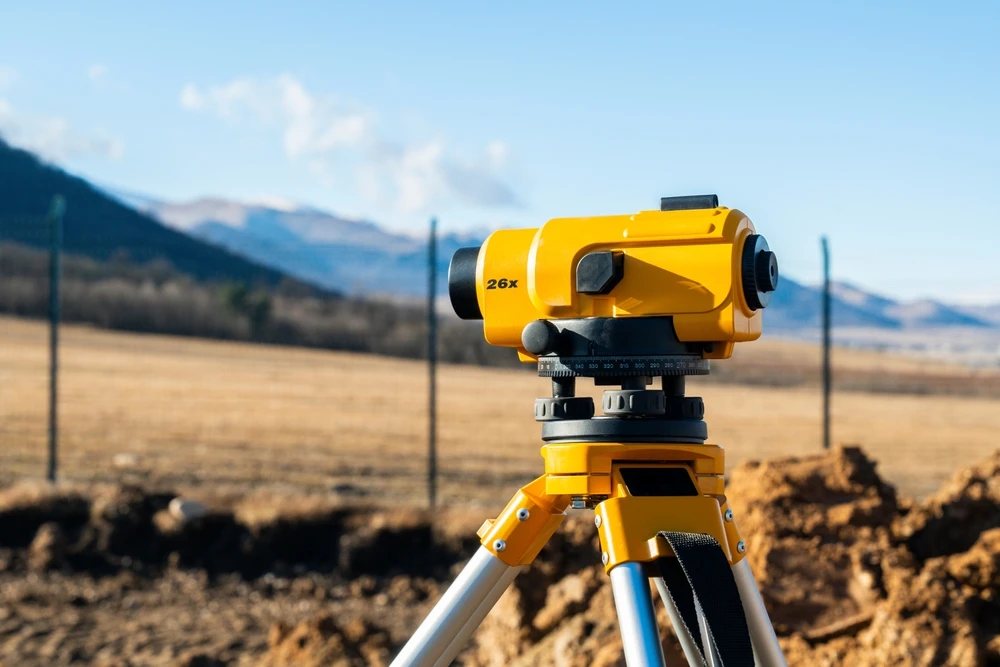
Modern construction sites rely heavily on accurate, real-time information and this is where technology-driven surveying is essential. Surveyors use advanced equipment and software to capture precise data quickly so that builders in Shellharbour and the Illawarra can make confident decisions, reduce rework and keep projects on program.
Today’s surveying technology goes far beyond a basic theodolite. It integrates laser scanning, GPS, robotic instruments and digital models so that everyone from designers to site supervisors is working from the same reliable information.
Robotic total stations allow a single surveyor to measure large areas and complex structures with very high accuracy. The instrument tracks a prism carried by the surveyor and automatically records positions which speeds up set out of grids, hold-down bolts, slabs and retaining walls. This is particularly useful on busy commercial sites where crane time and access are limited.
GNSS / GPS equipment is used where there is good satellite visibility such as open greenfield subdivisions or industrial estates. It enables rapid pick up of existing ground levels, services and boundaries tied to a consistent coordinate system. Surveyors combine GPS and total station data so that detail surveys and set outs match the site and the design without gaps or misalignment.
Laser levels and digital levels are still important for day-to-day construction control. They provide fast and reliable checks on slab heights, drainage falls and wall positions so that trades can proceed without waiting on full survey pickups.
3D laser scanners capture thousands of points per second creating a dense point cloud of buildings or terrain. This is ideal for complex sites such as refurbishments, plant rooms or irregular rock faces where tape measures and simple spot levels are not enough.
From these scans surveyors can produce accurate as-built models and sections that designers can import directly into CAD or BIM software. This reduces guesswork during structural design and helps identify clashes before materials are ordered. On structural jobs scanners are often used to confirm column and core locations or to check precast and steel alignment before the next stage proceeds.
Drones or UAVs may be used for larger open sites where they are permitted. They can provide rapid aerial mapping and volume calculations for bulk earthworks although they must be backed up by ground survey control for best accuracy.
Modern surveying is as much about data handling as it is about field work. Surveyors use specialised software to convert raw observations into coordinated models that align with architectural and engineering drawings.
Design files in DWG or IFC format can be loaded directly into survey instruments for set out. This allows surveyors to place critical points such as grid intersections, anchor bolts and services penetrations exactly where the design intends. When construction is complete as-constructed survey data is supplied digitally so that builders, engineers and councils have a permanent and verifiable record of what has been built.
In construction, success ultimately comes down to certainty: certainty that the land has been properly understood, that designs can be built as intended, and that every stage of the project is measured, documented and controlled. Surveying underpins that certainty from first concept through to final handover. By investing in thorough pre-construction surveys, we reduce risk and avoid costly surprises. Through precise site control and construction set out, we give every trade a reliable framework to build from. With accurate earthworks and volume surveys, we manage material movements, budgets and timeframes with confidence. As-built, compliance and monitoring surveys provide the verification, proof and assurance that what has been delivered truly aligns with design, safety and regulatory requirements. By embracing modern surveying technologies, including GNSS and total stations, as well as drones, laser scanning and BIM-integrated workflows, we gain the speed, accuracy and transparency that contemporary projects demand. Taken together, these surveying services are not an optional extra. They are a critical and integrated part of responsible project delivery, protecting budgets, timelines and reputations on every construction project we undertake.