Fastest Turnaround Times In The Surveying Industry!


Using UAVs and mobile mapping is reshaping how complex survey projects are delivered. As technology advances, clients now expect faster turnaround, higher data richness and greater certainty in design and construction outcomes. For surveyors in Wollongong, these tools are especially valuable on projects where terrain, coastal conditions, access constraints and compliance requirements can make conventional capture slow or high-risk. MCS Surveyors explains how integrated UAV and mobile mapping workflows meet those expectations in real conditions, working alongside traditional surveying practice rather than replacing it.
The discussion focuses on how UAV photogrammetry and LiDAR, combined with vehicle-mounted mobile mapping systems, provide highly accurate spatial data over large or difficult sites in a fraction of the time required by conventional methods. You will see where these technologies deliver the most value, how they influence programme and cost risk and what to look for when engaging a survey partner for complex work.
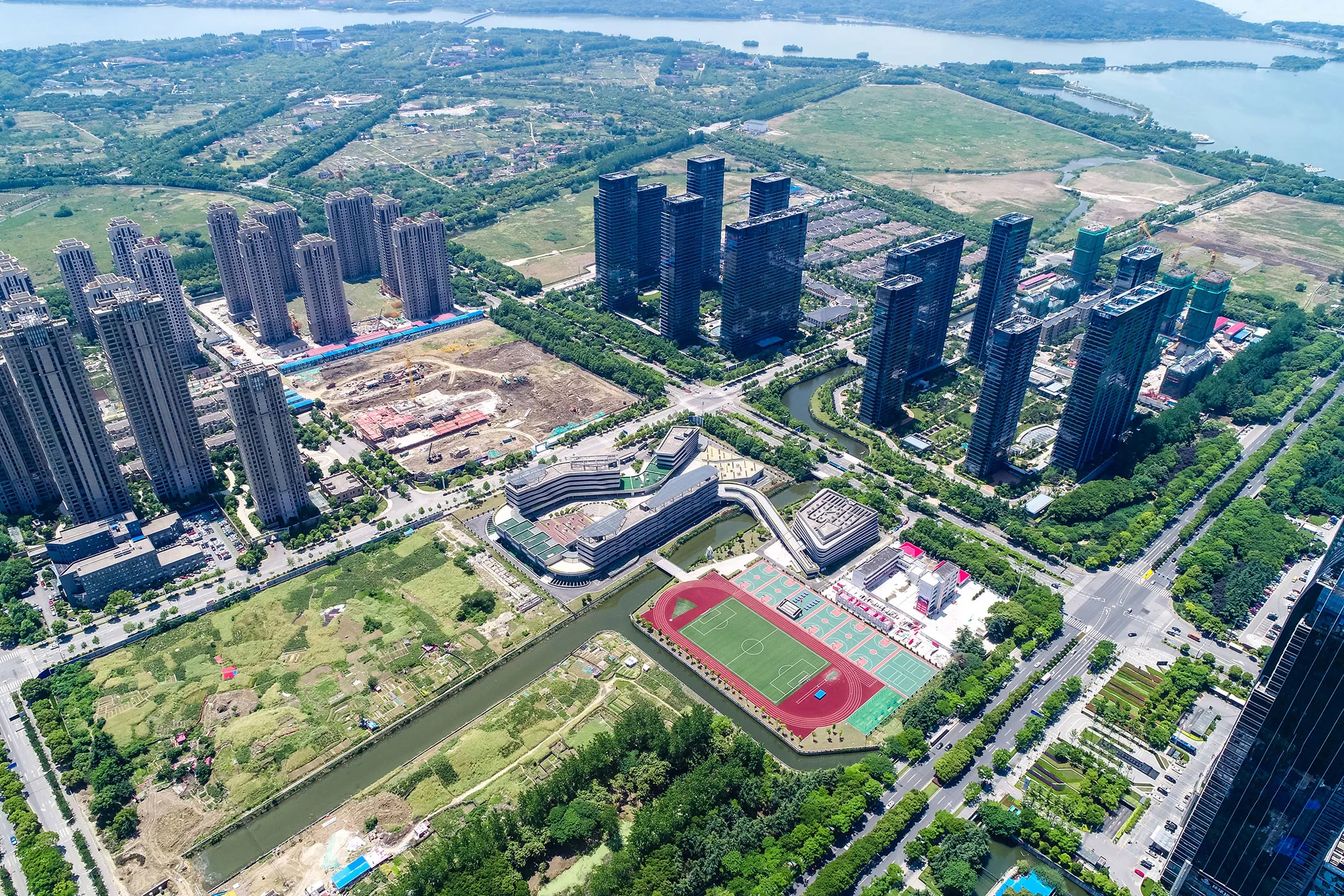
UAV surveys are most valuable in projects when rapid, high‑density spatial data is needed over areas that are difficult, risky or inefficient to measure from the ground. They complement, rather than replace, traditional surveying and mobile mapping by providing detailed surface models and imagery that can be integrated into broader geospatial datasets.
For many civil, construction, mining and environmental applications in Australia, UAVs allow projects to move faster, improve safety and reduce site disruption. The key is knowing when regulatory conditions, site characteristics and accuracy requirements make drone deployment the best option.
UAVs are ideal when a traditional ground survey would be slow, unsafe or disruptive. This is common across regional New South Wales and wider Australia, where sites can be remote or have challenging terrain.
Typical situations include the following:
In these contexts, surveyors can capture high-resolution aerial imagery and point clouds without placing surveyors in dangerous areas or stopping site activities for long periods.
UAV surveys can achieve very high relative accuracy and sufficient absolute accuracy for many design and volumetric tasks when flown with survey‑grade GNSS control and careful planning. They are effective when the project requires:
Frequent stockpile or earthwork volumes
Contour mapping and surface models for concept or detailed design
Regular progress capture for construction monitoring
For example, UAV data is generally well-suited for:
Where millimetre‑level accuracy is required, such as in structural setout or machine guidance calibration, UAV data is typically used alongside traditional total station or GNSS surveys rather than as a standalone method.
UAV surveys must comply with Civil Aviation Safety Authority (CASA) regulations, influencing when and where drones can be deployed. Practical use is strongest when:
Urban projects near airports, sensitive facilities or heavily built‑up areas may face airspace or privacy constraints that limit or shape UAV operations. In these cases, surveyors integrate drone data with mobile mapping or terrestrial surveys so clients still receive a complete dataset while meeting regulatory and safety obligations.
Surveying in heavy vegetation, along dynamic coastlines or on steep or unstable terrain is often where traditional ground survey methods become slow, risky and expensive. This is where surveyors combine UAVs and mobile mapping to capture accurate spatial data while minimising time on the ground and exposure to hazards.
These environments are common on infrastructure corridors, coastal developments, mining leases and environmental monitoring projects. By flying above obstacles and using vehicle- or backpack-mounted sensors, survey teams can map areas that are unsafe or impractical to reach on foot while still delivering survey-grade outputs that integrate with existing project control.
Dense bushland and forested sites restrict line of sight for GNSS and total stations and often hide critical features, like drainage paths and ground breaks. UAV photogrammetry and LiDAR provide a practical solution by capturing overlapping aerial images or point clouds that can be used to generate terrain models and feature mapping.
For vegetated sites, licensed survyeors typically combine:
In lighter vegetation, high overlap aerial imagery can still resolve the ground surface between trees and shrubs. In heavier canopy conditions, UAV LiDAR can penetrate gaps in foliage to return points at ground level, improving contour generation and volume calculations for earthworks planning.
Coastal projects need accurate information in environments that change with tides, storms and erosion. Soft sand, dunes, rock platforms and tidal zones can be difficult and unsafe to measure by foot within narrow time windows.
Using UAVs, professional surveyors can:
Aerial datasets are tied to survey control, so design teams receive consistent coordinate and height information across land and nearshore zones. Where needed, mobile mapping from vehicles or side-by-side buggies is used on access tracks, seawalls and road corridors adjacent to the coast to pick up kerbs, guardrails and services that link into the coastal model.
Quarries, mine faces, cuttings, cliffs and landslip areas all present safety challenges for traditional survey approaches. UAVs allow measurement from a safe standoff position, while mobile mapping captures accessible sections from vehicles or backpacks.
For example, in steep or unstable terrain, surveyors can:
This approach reduces the need for surveyors to enter exclusion zones or work near edges and machinery. It also shortens site occupation time, which is important on live construction or mining sites and in remote areas where access windows may be limited by weather or environmental conditions.
Mobile 3D mapping systems allow surveyors to capture highly accurate corridor data while travelling at normal traffic speeds. By mounting LiDAR scanners and imaging sensors to a vehicle, licensed surveyors can survey hundreds of kilometres of road or rail in the time a traditional crew might spend on a single section.
These systems are particularly valuable in Australia, where projects often cover long regional corridors or complex urban networks. The result is a dense 3D point cloud and calibrated imagery that supports detailed design, clash detection and asset management without repeated site visits.
Mobile mapping units combine LiDAR sensors with panoramic cameras, GNSS receivers and inertial measurement units. As the survey vehicle travels, the system continuously records millions of 3D points per second together with position and orientation.
For road and infrastructure projects, this workflow typically includes:
MCS Surveyors then delivers georeferenced point clouds, 3D linework and surface models that integrate directly with engineering and CAD platforms. Features such as kerbs, pavement edges, barriers, utilities and structures can be extracted with great detail for design and setout.
For busy roads, mobile mapping reduces the need for surveyors to work in live traffic. Data is captured from within a vehicle, improving safety and minimising traffic control, costs and disruption to the public.
Large corridors such as state highways, transmission lines or pipeline routes benefit from:
Because the LiDAR and imagery record the full corridor rather than only selected cross-sections, designers can investigate additional features later without a return survey. This is useful where project scopes evolve during planning approvals and detailed design.
Surveyors commonly combine mobile mapping with UAV photogrammetry and conventional ground surveys for complex projects. For example, UAVs are used to capture elevated structures or inaccessible embankments while mobile mapping covers the pavement corridor and adjacent assets. Ground control and selective total station or GNSS checks are then applied to tie all datasets into a single coordinated model.
This integrated approach provides survey‑grade accuracy along the road surface, surrounding terrain and built assets, supporting:
By delivering a complete and consistent 3D dataset, licensed surveyors help project teams make better decisions earlier and reduce uncertainty across the full length of infrastructure corridors.
Drone surveys in Australia are tightly regulated by the Civil Aviation Safety Authority (CASA). For complex survey projects, it is not enough to simply own a UAV and a licence. Surveyors must understand how CASA rules interact with project design, safety planning and legal survey deliverables, especially in built‑up or sensitive environments. Expert surveyors operate under CASA requirements for commercial Remotely Piloted Aircraft (RPA) operations. This ensures aerial data is collected legally and safely and that survey outputs can stand up to scrutiny from clients, regulators and courts.
Most professional survey work falls under commercial RPA operations. As a baseline, survey teams conducting paid UAV work operate under a CASA authorisation (commonly a ReOC or under another organisation’s ReOC) and ensure pilots hold the appropriate credentials for the aircraft and operating category, such as a Remote Pilot Licence (RePL) or the relevant CASA accreditation.
For typical survey deployments, multi-rotor and fixed-wing platforms are commonly within the lower weight classes used across industry. Heavier aircraft can trigger additional CASA requirements around certification, maintenance and operating approvals, which can make them impractical for many survey applications.
More complex jobs, such as operating near controlled aerodromes, within restricted airspace, at night or beyond visual line of sight (BVLOS), require specific CASA approvals and tighter operational planning. Where a project demands these conditions, surveyors either secure the necessary permissions and procedures in advance or adjust the flight plan and data capture method to stay compliant while still achieving the required deliverables.
Most survey projects must be designed around CASA’s standard operating conditions. Key rules that directly affect survey planning include:
In practical terms, this shapes how flight lines are set up, how close the UAV can get to building façades and infrastructure and how access to the site is managed. For example, surveying an urban infill site near busy streets may require partial road closures or the use of higher-altitude imagery combined with ground control to maintain safety and data quality.
Many projects sit within controlled or restricted airspace, such as near major airports or defence facilities. Before any UAV work is scoped, surveyors check airspace using CASA-approved drone safety apps and current aeronautical information, then confirm what approvals are required for the location and operating method. Where permissions are needed, the flight plan is designed around those constraints and the relevant airspace approvals and notifications are secured before mobilisation.
Site owner consent is also essential. On mining, industrial and infrastructure projects, this typically includes site inductions, alignment with local safety systems and clear coordination with other high-risk activities such as lifting operations, blasting, plant movement and exclusion zones. In regional Australia, planning also accounts for low-level agricultural aviation and emergency services aircraft so UAV work does not interfere with other operations.
By building CASA compliance and site permissions into project scoping and flight planning from the start, surveyors keep drone surveys safe, legal and efficient, even in complex environments.
Integrating UAV and mobile mapping with conventional field surveying allow complex projects to be delivered faster without sacrificing accuracy. Rather than replacing total stations and GNSS, these technologies expand what can be captured in a safe, efficient way, then tie it all back to rigorous survey control.
For clients, this integration means rich 3D information that is still aligned to local control networks and project datums. For survey teams, it means investing time in planning control, data management and QA so that all datasets combine into a single reliable model.
Successful integration starts with a robust ground control network. Surveyors design survey control suited to conditions such as wide corridors, remote sites and challenging access.
Primary control is set using GNSS and total stations, then checked with independent observations. From this control, we establish:
Control is normally related to the required datum and projection, such as GDA2020/MGA zones. This ensures UAV point clouds, mobile mapping data and traditional survey observations all sit in the same coordinate system without ad hoc shifting.
Once control is in place, the focus shifts to how the datasets are aligned and merged. UAV imagery is processed into point clouds and surfaces referenced to surveyed ground control. Mobile mapping data are trajectories solved using GNSS and inertial systems, then constrained to the same control network using surveyed tie points or reflective targets.
Traditional field observations are added as high-reliability constraints, particularly for:
The combined dataset is then adjusted so that residuals against control and checkpoints meet project tolerances. Professional surveyors document these statistics, so design teams understand the confidence level across different parts of the model.
Complex projects such as transport corridors, industrial plants and large greenfield developments benefit from carefully planned hybrid workflows. A typical approach might use UAVs for broad terrain and volume capture, mobile mapping for roads and structures and traditional surveys for fine detail and boundaries.
Field crews verify key features from the point cloud, like kerb lines, retaining walls and critical break lines with total stations. In vegetation or shadowed areas where UAV data may be weaker, additional ground surveys fill the gaps. All outputs are delivered in client-specified formats with clear layer naming that distinguishes source and accuracy.
By treating UAV and mobile mapping as integrated extensions of traditional surveys rather than standalone products, survey teams can provide richer datasets while preserving the reliability clients expect from licensed survey deliverables.
Selecting between traditional surveys, UAVs and mobile mapping is ultimately about matching the method to the site conditions, required accuracy and budget. Projects must also factor in regulatory constraints, remote locations and often tight construction programmes. The right mix of technologies can deliver high-quality data faster while improving safety and keeping overall project costs under control.
MCS Surveyors assesses each project on its technical requirements first, then chooses the method or combination of methods that achieves the specification with the least risk and disruption. UAVs and mobile mapping complement conventional total stations and GNSS work rather than fully replacing them.
The starting point is always what accuracy the client actually needs and what deliverables are required. For cadastral boundaries or set‑out of critical structures, millimetre- to low‑centimetre accuracy is typically essential. This usually requires control established with GNSS and total stations, then targeted measurements or laser scanning on the ground. UAV data is then used for context and volumetrics rather than legal definitions.
For road corridors, quarries or large civil sites where 20 to 50 millimetre accuracy is acceptable, UAV photogrammetry or mobile laser scanning can be ideal. UAVs can quickly produce detailed surface models and orthophotos suitable for bulk earthworks, design checks or progress reporting. Mobile mapping along a road can efficiently capture pavement edges, barriers and surrounding assets for design and clash analysis.
Site characteristics strongly influence method selection. Steep batters, unstable ground, water bodies or live traffic all increase risk if surveyors must be physically present. In these situations, UAVs allow rapid capture from a safe distance, while mobile mapping can collect data from within a vehicle moving with traffic controls in place.
Dense vegetation or shaded urban environments may limit UAV effectiveness. Laser scanning from the ground or mobile systems can penetrate some vegetation better than imagery, although extreme density may still require selective clearing or traditional pickup of critical features.
Time constraints and overall project cost also guide the choice. UAV and mobile mapping involve a larger initial setup. But once deployed, it can capture vast areas in a fraction of the time of traditional methods, reducing field days and traffic control expenses. For repeat surveys such as monthly stockpile volumes or construction progress, the cost advantage compounds over the life of the project.
However, for very small or highly constrained sites, the mobilisation and processing effort for UAVs or mobile mapping may not be justified. A targeted total station survey or static laser scan can be more cost-effective while still meeting accuracy and safety requirements. Surveyors often adopt a hybrid approach using UAVs or mobile mapping for broad coverage, then filling gaps and critical details with conventional surveys, so that the client pays only for the level of technology that actually adds value.
The adoption of UAVs and mobile mapping has changed how complex survey projects are delivered. When aerial photogrammetry, LiDAR and advanced mobile mapping are integrated into a single workflow, survey teams can capture large and intricate environments with the detail and consistency needed to improve design accuracy, coordination and long-term asset management. The examples discussed show this technology is not a novelty. It is a proven toolkit that, when supported by strong survey control, QA and CASA-compliant planning, helps reduce programme and cost risk. As capability continues to develop, the priority will remain the same: select the right method for the site and deliverables, integrate UAV and mobile outputs with traditional survey work and turn spatial data into clear, actionable information.